
Things we all do rebranded as hacks
I wasn’t quite sure how to title this piece, because what I want to talk about is a little hard to define. It was prompted by a sense of disconnection I felt scrolling through Reels on Instagram (as with so many thoughts!). I follow a fair number of clothing-based content creators, so Instagram’s algorithm serves me with plenty more. As with all content creators, similar types of video are made over and over again, the same ideas popping up repeatedly. Perhaps it was this repetition that drove home a simple realisation: do we really need to be told this? Why is it that this ecosystem of content grows up around ideas that are not only simple, but that we’ve actually all been doing for years? Do we really need to be taught five different ways to ‘style’ a t-shirt, or how to add a ‘pop of colour’ (inevitably red!) to our outfits?
Now, I can’t get too high on my horse about this, because I’ve made this type of content myself (e.g. about pinafore dresses) and indeed there are creators whose content I find useful. I think there is a place for demonstrating how to get more use out of seemingly less versatile items. But haven’t we all been wearing things in multiple ways for years? Likely our whole lives? I would hazard a guess that the majority of people cannot afford, in financial or space terms, to fill their wardrobe with pieces they only wear in one way. Most of us has been forced by necessity to find multiple ways to style, layer, and generally make the most of the garments that come into our possession.
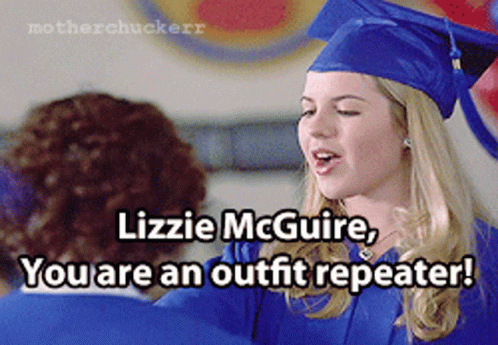
So why is it that influencers and content creators brand this, explicitly or otherwise, as unusual behaviour? I think it is a reflection of the environment that they themselves have helped to create. There is a huge divide between the wardrobe of social media and the wardrobe of reality. Online, and especially for people whose job it is to create clothing content, there has long been an expectation of novelty – of not being seeing to wear things again and again. The haul cultures of the 2010s thankfully sees to have at least partly subsided, but there is still a lingering sense, at least on the part of creators, that you have to apologise if you wear something more than once. That you shouldn’t be an ‘outfit repeater’. The pushback against this we see in the ‘five ways’ type videos should therefore be lauded – it’s great to see this once consumerist group championing a more sustainable approach.
But is it really more sustainable? In truth, many of these videos are still about buying something new. The item may be more neutral or versatile than the haul content of the past, but it still comes with LTK links, affiliate ads, and all the trappings of consumerism that will leave people feeling that their wardrobes are inadequate and they need to buy something to fix it. This is even more the case for ‘pop of colour’ content, where you’re left feeling that you need a specific colour to complete your looks.
So it feels to me that this clothing content is an uncomfortable collision of two worlds: the reality of how most of us already use our wardrobes, and the influencer’s economic incentive to get us to buy more stuff. In some ways it’s great to see a more realistic approach, and that the people who once made us feel we had to buy as much and as often as possible are now encouraging us to make things last. This turn was perhaps inevitable given the current economic situation and ever-worsening cost of living pressures. But if it still has the end-goal of selling us something (usually from Sezanne), is it really much better?
I’m going to try to see the positives in this type of content, even if it makes me uncomfortable. If someone watches it and then feels they have ‘permission’ to rewear things, that can only be a good thing. For those of us who were doing that all along, I guess we just get t feel extra good about ourselves. But next time a fashion influences comes at you with a radical new idea like wearing your clothes in more than one way, or choosing colourful accessories, maybe stop for a second, and give yourself the credit you deserve for already doing it.
What do you make of the divide between influencer wardrobes and ‘real’ ones? I don’t in any way mean to do down these people and their content, but I think we all need to acknowledge the unusual social and economic situation they exist in, and how we need to contextualise their advice in our own lives. I’d love to hear your reflections, so please do share them in a comment.
 The Feminist Gadabout