
Reviewing products from the popular eco-friendly brand
I’m sure I’m not alone in having heard about Who Gives A Crap (WGAC) a long time before I used any of their products. They seemed to have a very impressive marketing reach, and their discount codes were everywhere for a while. Not quite as ubiquitous as Hello Fresh, but not a million miles off. They offer a range of products, but their ‘hero’ is the 100% recycled toilet paper, which also seems to be the most popular product. Their quest to reduce waste and keep trees from being cut down has given them a positive reputation, as has their commitment to donating 50% of their profits to charity. Fittingly, I first used WGAC at my work, which is a not for profit. WGAC are also a certified B-Corp, which always inspires a degree of confidence. They offer carbon neutral shipping on orders over $30, and it’s pretty much impossible to spend less than $30 if you’re after the best value. I suspect this is carbon offsetting, which is a fairly suss practice, but I suppose it’s better than nothing!
Despite hearing about them and using them at work, it took being pregnant to inspire me to try WGAC at home. I’m never quite sure if recycled versus bamboo is better for the environment, and I was already able to buy recycled loo roll at the supermarket (albeit wrapped in plastic!). But WGAC works to a subscription model, and the idea of not really needing to remember to buy toilet paper was pretty appealing with a baby on the way. I’ve now tried a few of their different products, so thought I’d share my thoughts for anyone else ‘umming’ and ‘ahing’ about whether to give them a try.
100% Recycled Toilet Paper
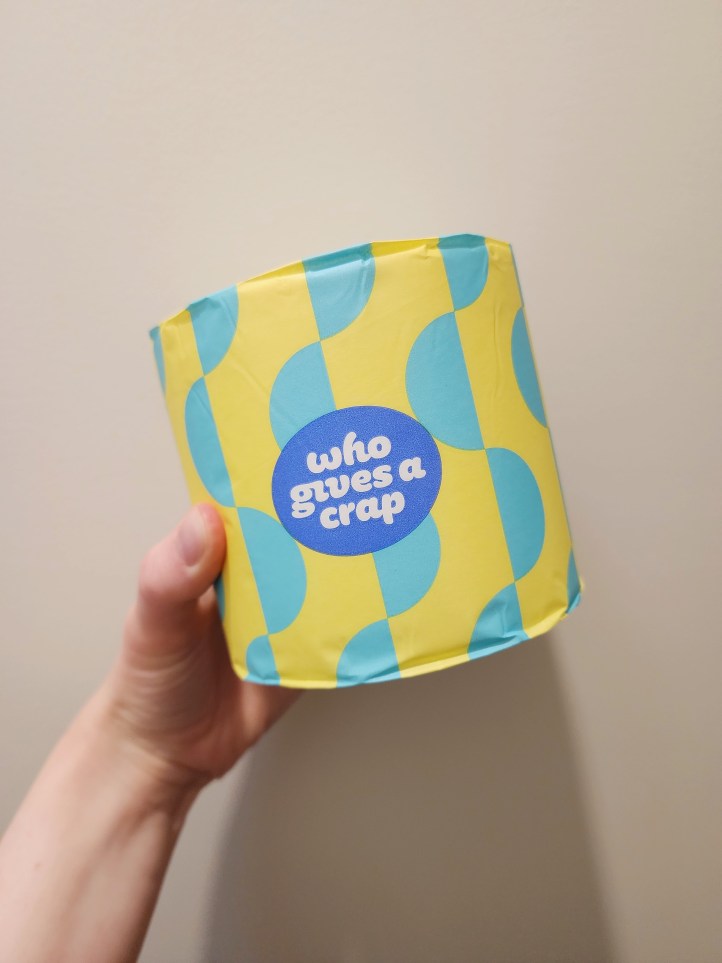
Starting off with the OG, the recycled loo roll. This is the one I had tried at work. I love the fun, brightly coloured packaging it comes in, which – most importantly – is made of paper, not plastic! This is the main advantage I can see to WGAC over the other recycled paper products. It is a perfectly decent loo roll, but if I’m brutally honest I find it a little too flimsy. It’s three ply, but I couldn’t really tell, as each of them was so thin. However, I have quite harsh requirements for loo roll, and without being too graphic, these had only increased during pregnancy. So if you’re less picky than me, in all likelihood you wouldn’t notice.
The best value option is the 48 roll pack, for $60, at 31c per 100 sheets. This is pretty decent value, comparable to the price of supermarket brands. I would say that the aforementioned flimsiness meant that a roll didn’t last me very long, but the box of 48 has still lasted me several months. So overall it’s not bad going.
If you’re not too picky about your paper, and would like to reduce your plastic waste, this is a great option.
Premium 100% Bamboo Toilet Paper
My experience with the recycled paper inspired me to give this one a try. As I said, I’m never quite sure which is better for the environment between recycled and bamboo, but I think the growth rate and relatively low resources required to commercially produce bamboo makes it still an environmentally friendly choice.
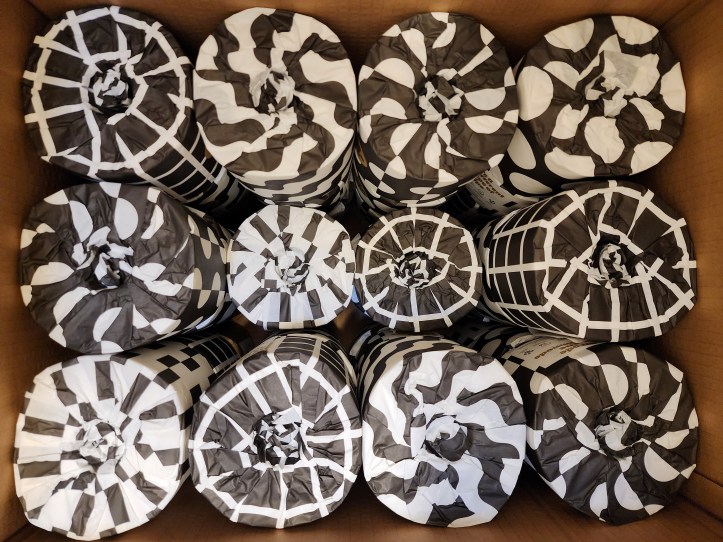
Once again this comes in a box of 48 rolls (or you could get either type on 24 roll boxes), and costs a mere $6 more than recycled. For what you’re getting I think this is well worth it. It’s still not a particularly luxurious product, but it is a marked improvement on the recycled paper. It’s relatively soft, and much sturdier. This is a product I can see myself subscribing too, whereas the recycled definitely ended up being a one-off purchase. The only change I would make is that the bamboo comes in black and white wrapping (pictured above) – I’d love to still have the option of the bright and cheerful colours. But that is a very minor criticism!
Forest Friendly Tissues
WGAC have branched out to offer a number of other products, including these tissues. Somehow I always manage to run out of tissues, so buying them in bulk from WGAC seemed worth a try. They come in a pack of 12 boxes, and are another 100% bamboo product (hence ‘forest friendly’). They come in nicely designed and brightly coloured boxes, but are otherwise fairly average tissues. They’re a standard size, and neither especially soft nor particularly rough. I felt as if I was getting through them more quickly than my usual tissues (although in fairness I do usually buy the extra large kind), but I’ll admit I haven’t tested this. At $26 for 12 boxes, they’re comparable in price to those you’d find in a supermarket.
If you’re worried about running out and the idea of buying in bulk appeals to you, these would be a good option. Although most brands offer plastic free packaging for tissues these days, the bamboo may be an environmental trump card. On performance alone they wouldn’t win me over, but if your primary concern is these potential environmental wins, they’ll do the job nicely.
Forest Friendly Paper Towels

The final WGAC product I’ve tried is their paper towels (or kitchen paper as we call it in my house!). These come in packs of 6 for $20, which is definitely at the more expensive end of what I’d expect to pay for paper towels.
However, these have turned out to be my favourite of the WGAC products, so I think the price is worth it. They’re far superior in strength and absorbency to the recycled paper I was previously buying from the supermarket, and therefore one roll lasts me a lot longer. Like the recycled loo paper, they come in cheerfully bright packaging, although I’m not really displaying them in the way one might display spare loo roll, so it’s a little bit pointless. But some extra colour in the cupboards doesn’t do any harm!
How it works
Both of the toilet papers can be bought as a subscription, meaning you won’t have to purposefully re-order them. You select a box size and frequency (they have some guidance on working this out based on your household size), and they’ll automatically take payment and deliver your future orders. I went for a delivery of 48 rolls every 12 weeks, and so far (two deliveries in) haven’t managed to get through the whole box before the next delivery, even of the more quickly used-up recycled version. So I may need to adjust my frequency. I haven’t yet tried to cancel a subscription, so I can’t report back on how easy this was, however I have updated my subscription from the recycled to bamboo, which was a simple matter of just a few clicks.
The other products are all add-ons, which have to be ordered manually each time. Alternatively, you can just make a one-off purchase and have them delivered straight away without having to wait for your next subscription delivery. I’ve tried both, and the stand-alone delivery was really fast. This option isn’t quite such good value, as you’re having to pay for multiple deliveries, but it’s good if you’ve run out of something.
Should you try it?
All things considered I think WGAC is a great choice if you’re looking to make your life (or rather grocery shopping) a little bit simpler whilst also paying attention to your environmental impact. The products aren’t all perfect, and some of them may not be the cheapest, but the pros definitely outweigh the cons.
If you’d like to give WGAC a go, you can follow the link below to use my referral code and get us both $10 off. There is a minimum spend of the slightly bizarre amount of $56.
Get $10 off your first WGAC purchase
Have you tried Who Gives A Crap? What other eco-friendly household products do you use? I’d love to hear your recommendations in a comment!
 The Feminist Gadabout